Showing posts with label working with kids. Show all posts

3.02.2015

It's Monday! What Are You Reading? From Picture Books to YA


I read a wide variety of books this week, mostly because I'm preparing for a parent workshop I'm conducting at the temporary shelter I do read-alouds at. There are a lot of "littles" at this shelter so the focus is on interactive books, mostly for young readers (under the age of 8). 

I also caught up with some comics reading, having bought new issues of Gotham Academy, Thor, and The Sandman: Overture. I have mixed feelings about this: I miss buying comics every month, but my wallet -- and probably my husband -- were thankful for the recent purchasing reprieve. I really am trying to minimize shopping and accumulating new things (even my beloved books) but it's hard!

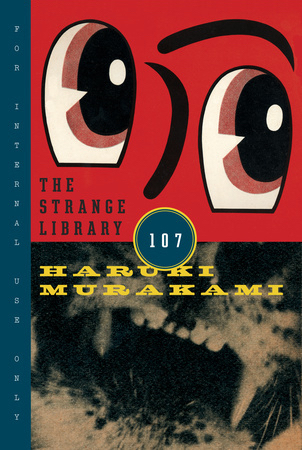
Also in this week's mix are two books that aren't specifically geared towards young adults: the aforementioned The Sandman by Neil Gaiman and The Strange Library by Haruki Murakami. But both would appeal to the right teen reader (there's no gratuitous violence, sex, or cursing).

I was particularly taken with two very different books this week. The first, Before After, is a wordless concept book that I think is really great, and I'm going to emphasize heavily during my workshop. The second, Wandering Son, is a Japanese manga (translated) that gently tells the story of two 5th grade transgender kids. You don't see that kind of story very often, and I'm guessing that many Western readers might be surprised that it's a topic covered in a Japanese book. I only read the first volume so I'm eager to check out the rest of the series at the library.

[To rehash the concept :: post what you read last week, what you're reading now, and what you plan to read this week. If you have a review of the book(s), great! If you have a picture of the book(s), wonderful! If you have a book giveaway, fantastic! If you just list the title(s) of the book(s), not a problem! Make it as simple or as complex as you need it to be. At least, that's the message I got. This version of the meme is hosted by Jen and Kellee of Teach Mentor Text, which, in turn, was inspired by Sheila over at Book Journey, who hosts the original It's Monday! What Are You Reading?]

WHAT I READ LAST WEEK:


Bath Time! by Sandra Boynton

Before After by by Matthias Arégui and Anne-Margot Ramstein

Don't Let the Pigeon Drive the Bus! by Mo Willems

Gotham Academy, Issue #4 & #5 by Becky Cloonan and Brenden Fletcher, illustrated by Karl Kerschl

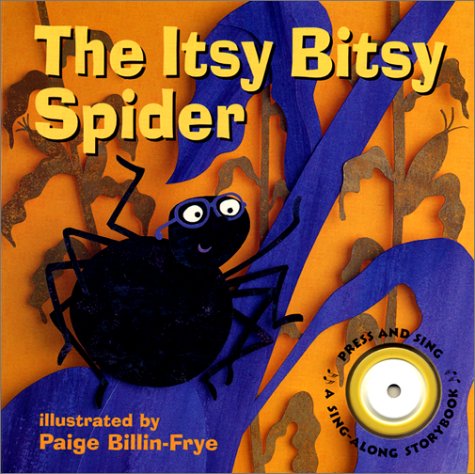
The Itsy-Bitsy Spider illustrated by Paige Billin-Frye

Look-Alikes: The More You Look, the More You See! by Joan Steiner, photography by Thomas Lindley

Looking Good! ¡Lucir bien! by Jess Stockham

Mix It Up! by Hervé Tullet

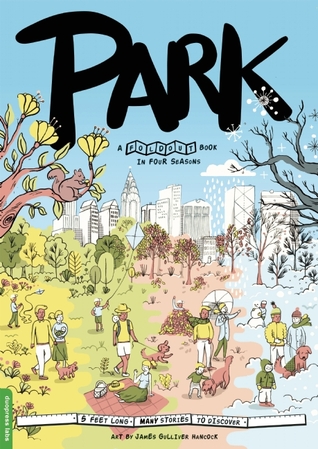
Park: A Fold-Out Book in Four Seasons by James Gulliver Hancock

Press Here by Hervé Tullet

The Sandman: Overture #4 by Neil Gaiman, illustrated by J.H. Williams III 

Silly Faces - See Me...Go! by Bénédicte Guettier

The Strange Library by Haruki Murakami, translated by Ted Goossen, designed by Chip Kidd

Touch and Feel: Kitten by Joanna Bricknell

Wandering Son: Volume One (放浪息子 1) by Shimura Takako (志村 貴子), translated by Matt Thorn

We Are in a Book! by Mo Willems

Who Hops? ¿Quién salta? by Katie Davis

Who's That, Baby? by Susan Amerikaner

WHAT I'M READING NOW:


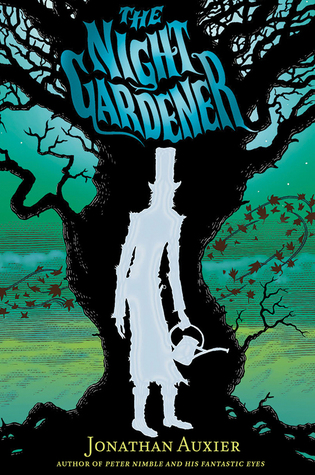
The Night Gardener by Jonathan Auxier

WHAT'S ON HOLD RIGHT NOW:


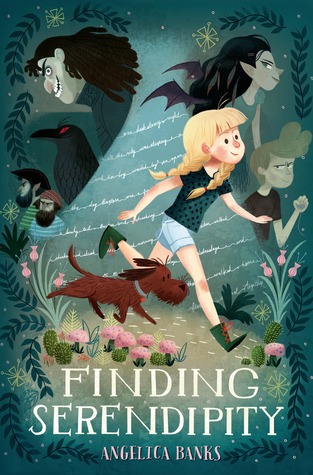
Finding Serendipity by Angelica Banks (aka Heather Rose and Danielle Wood)

9.07.2014

What do you do when you're a parent who knows too much?

There's something that has been bothering me since my daughter started fourth grade. I complained and got worked up about it in front of my husband, but I wasn't going to say anything publicly. But it continues to bother me two weeks later.

Then, an online book buddy of mine posted a link to Donalyn Miller's blog today. What Donalyn had to say kind of encapsulated what was bothering me. Even though what I was railing against isn't exactly the same as what Donalyn is talking about, the Big Picture point is.

So, what's been bothering me so much? The fourth grade team of teachers has outright banned comics and graphic novels from their classrooms. They don't consider it appropriate literature for in-class reading, and my guess is that part of the reason is because they don't think it fits in with what they want to teach for Common Core. You cannot even begin to imagine how much this irked me and strengthened my resolve to provide access to more graphic novels at home.

Here's the thing ... having worked and volunteered in school libraries, I know there are kids who only want to check out comics and graphic novels. I also know that teachers want to expand those students' reading range by making them check out "real" books with chapters and few pictures. I want to believe that their hearts are in the right place and that they want to help their students. But I also know that when you dictate what kids can and can't read, it often backfires.

I don't know a single comics enthusiast who isn't an avid reader; they read a lot. Do teachers consider them "real" readers? That's a good question. The teachers I know do consider those students real readers, and promote graphic novels and comics enthusiastically because they themselves read them. I wouldn't be surprised if the fourth grade teachers haven't read many comics or graphic novels, and look at them negatively because they have preconceived notions and they don't want those kinds of books taking time away from the kids reading "quality" literature.

This idea about teachers not reading goes back to what Donalyn was saying:
A line divides parents who know a lot about reading and their children’s less-knowledgeable teachers. What can we teacher-parents do when our children have poor reading instruction at school? I may not have my own classroom this year, but this reading war front line cuts across my lawn. It stretches across my dining room table—limiting and defining my children’s reading lives.
I'm not a teacher but I feel like I have enough work and personal experience to have a qualified opinion. Teachers who haven't read all-ages graphic novels written within the last ten years have no idea how high the literary quality is, and I personally believe they're not in a position to value them lower than some of the chapter books they approve of.

Donalyn goes on:
Last week, Emma [her granddaughter in first grade] and I re-read three outstanding wordless picture books, Flashlight by Lizi Boyd, The Troublemaker by Lauren Castillo, and Molly Idle’s Flora and the Flamingo, a 2014 Caldecott Honor Book. Filling out her reading log, Emma said, “We can't write those books down, Mimi. We didn't read any words.” 
These books are standouts—amazing pieces of storytelling. Award-deserving. Emma recommends them, too. 
Sadly, they're not reading log worthy.
I feel the same way about how these teachers view comics and graphic novels. They're not classroom reading worthy. They're not literature-with-a-capital-L label worthy. Yet, some of them are amazing pieces of storytelling that range from fantasy to history to memoir.

The idea that teachers don't read enough also hit home when my daughter's teacher sent an email basically stating that the kids didn't know how to choose books from the library at their reading level that weren't graphic novels, picture books, or magazines [emphasis is mine]:
Although these types are entertaining they are really not helping them progress in building their reading fluency and comprehension. I tried to direct many of them today to authors like:

Judy Blume
Andrew Clements
Matt Christopher – boys really seem to like this author
Louis Sachar
Roald Dahl
Katherine Paterson
I have nothing against these authors; in fact, they write great books for fourth graders. But, really? These are authors that many parents know because they read their books as children. To the student population at my daughter's school (i.e., upper-middle to upper class with highly educated parents), they are names that are all-too-familiar and their books are probably already on their bookshelves at home.

It made me sad that her teacher (who is quite young; this is only her second year of teaching) couldn't come up with different authors or recent award winners and starred review-earners, but she has the Twilight series in her classroom library.

At this point, I was getting really upset. And I was having doubts about the reading instruction my daughter was getting at school. I never had this worry with my son because reading came very naturally to him, but my daughter is my competent-but-reluctant reader and I need her reading world expanded, not limited.

After a moment of pulling my hair out in frustration, I took a deep breath and decided this is where I can help solve the problem, not make it worse. I offered to come up with a suggested reading list. The teacher enthusiastically replied that would be really helpful to the entire fourth grade team. She mentioned the school uses Fountas and Pinnell levels so they were looking for books within a certain range. (Please don't get me started on reading levels ... that's another rant altogether!) So I obliged and came up with a list of 60+ fiction and nonfiction books. I included picture books because there are some great ones for older elementary kids that are contextually and linguistically complex. I plan to expand the list as I find time ... and to sneak in some graphic novels, too! I mean, c'mon, you can't convince me that you couldn't use Nathan Hale's Hazardous Tales for history, Raina Telgemeier's Smile to teach narrative writing, or Hidden: A Child's Story of the Holocaust to teach not only history but human empathy.

(This is where I would complain about the school's media specialist but I won't get into that. Suffice it to say, when I was an elementary media specialist and teachers needed a reading list, I was the one they turned to to help with that.)

It's easy, as a parent, to get frustrated with teachers, especially when you feel they're not meeting the needs of your child. And when you know a lot about something (whether it's literacy, math, or history), it's hard to understand why teachers aren't always getting it right. I've worked in public education, I see the amount of work and effort teachers put into educating their students, and I still get frustrated. What we have to remember is that teachers have to work within certain parameters dictated to them by the district and the state; they have to prepare their students for testing, whether they want to or not; they have 20+ different students, which means they have 20+ different needs to meet; and, guess what, not all teachers are readers!

I'll let Donalyn's words close out this post because there is something we can do as parents without undermining teachers:
Share what you [the parent] know. Learn as much as you can. Build relationships. When we remain silent—afraid to rock the boat, offend a teacher, or question an administrator, it’s a choice. What choices do our children have? 
We must advocate for children’s reading lives, or they won't have reading lives. 
If we don't speak up, too many children will make the only reading choice they have left. They will choose not to read.

[Here's a basic primer on the benefits of graphic novels and comics.]

9.03.2014

The Reading Connection, CAMPING Read-Aloud


I discovered a volunteer opportunity late in the spring when I attended a symposium at the Library of Congress. One of the attendees mentioned that she's part of The Reading Connection, a nonprofit that creates environments that encourage reading for at-risk children. Part of what they do is send volunteers to read aloud to children at shelters, transitional housing, and affordable housing. The organization was expanding into Maryland and I jumped at the chance to do read-alouds for kids again. It's a once a month, year-long commitment, which is manageable compared to the 18 read-alouds I did per week for four-plus years!

I'm on a team with five other people and we read-aloud at the same location every month. We're still trying to figure out how to plan our read-alouds, if there's going to be a team captain, what the themes will be, etc. Our first read-aloud was led by an experienced volunteer from another location. She helped us decide the theme and the crafts, and the day-of she was our captain. 

We chose a camping theme and I took it upon myself to get the books. I knew the age range of the kids was going to be from toddlers to eight or nine, and possibly older. Not having worked with this demographic before, I wasn't sure what it was going to be like in terms of attention span, background knowledge, and general level of interest. I chose a variety of books, hoping to find something that would work. I've included the notes I sent to my teammates as we were trying to decide which books to read. In the end, the experienced volunteer chose the three titles in bold and they worked out well (the oldest child was in third grade).

NONFICTION:

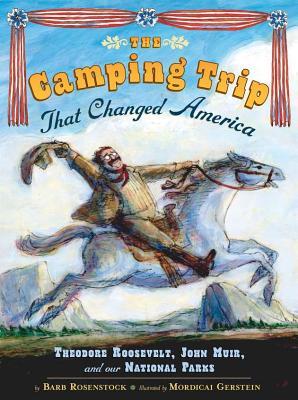
The Camping Trip That Changed America: Theodore Roosevelt, John Muir, and Our National Parks by Barb Rosenstock
I like this one quite a bit and I think it would be a great selection for the whole-group read-aloud. It is a bit on the longer side, but it's informative and pretty entertaining.


REALISTIC FICTION:

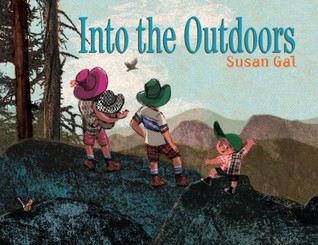
Into the Outdoors by Susan Gal

Ladybug Girl and Bingo by David Soman
The storyline incorporates not only what families do during a camping trip, but blends in some humor. I think the key to this one is that it tells the story well from a child's perspective (for example, she thinks she's wandered far away from camp, but she was really within view of her family).

Stella & Roy Go Camping by Ashley Wolff

When We Go Camping by Margriet Ruurs
This is a good one for small-group reading. There are hidden animals on each page blended into the background, and you're supposed to look for a squirrel as well.

HUMOR:
Amelia Bedelia Goes Camping by Peggy Parish
Word play is always fun, but it can be hit or miss with the younger kids. Having to explain too much about the double meaning of words/phrases takes away from the humor. Maybe 2nd or 3rd grade and up?

Camping Day by Patricia Lakin
This would work for the younger kids because it's rhyming and the text is pretty short.

Scaredy Squirrel Goes Camping by Melanie Watt
Another good choice for small-group reading. There's a lot of detail in the illustrations so it could take awhile to get through it.

CAMPING AT HOME: All three books are geared towards preschool age children.

Bailey Goes Camping by Kevin Henkes
This book and Lucille Camps In deal with a younger sibling being left behind while their older siblings go camping. But the young one finds things to do at home that are camp-like and just as fun. I think we should read one of these so the kids can get ideas of what they can still do indoors even if they can't go camping themselves. 

Duck Tents by Lynne Berry

Lucille Camps In by Kathryn Lasky

To set the mood, we brought in a real tent to read in, which got the kids really excited since most of them had never gone camping before ... maybe a bit too excited. It took a few minutes to get them to settle down, but once we separated a few of the kids they all listened attentively. The toddlers grew tired of the books pretty quickly and came out of the tent, drawn by the allure of markers and blank pieces of paper. Another volunteer and I kept the little ones occupied while three volunteers read whole-group. So, unfortunately, I didn't get a chance to read to the kids this time around but I'm hoping to get a turn next month. We also have the option to read in small groups after reading a book or two as a whole group, so we may pursue that option in the future, especially if we have some really young kids and older kids.

After the read-aloud we made a couple of crafts: campfire art and a camping lantern made out of a peanut butter jar. I also created camping-theme bookmarks for them.


Coincidentally, while I was working on compiling these books, CBS Sunday Morning ran a piece about surveying species among California's Redwoods. That made me think about how the DC area is has lots of National Parks, including Rock Creek Park. Re-reading The Camping Trip That Changed America reminded me of my family's brief visit to Yosemite a few years ago. 

[Yosemite Valley and Half Dome]

[Tenaya Lake]

5.18.2014

3rd Grade Book Club :: The Five Lives of Our Cat Zook

My daughter recently joined a book club with some classmates (all girls), which I was quite excited about because she's not always the most enthusiastic reader. I'm afraid that reading is becoming a chore for her and I was hoping that a book club would motivate her to read regularly and to read books she might not normally choose. Unfortunately, it hasn't gone exactly as I hoped and, in fact, in some respects it's become a bigger chore because I keep bothering her about trying to finish the books.

Anyway, we hosted the group this month and I wanted to share what we did for the book Maya chose, The Five Lives of Our Cat Zook by Joanne Rocklin:


All in all, I think it went quite well for my first Book Club. The discussion didn't last terribly long, but it got heated at times because it always does when you have Dog People vs. Cat People!

2.24.2014

This is why we do what we do ...

I received the nicest email this morning from the mom of a former student telling me her daughter (a 3rd grader) finished the Harry Potter series. Now, this is an accomplishment in and of itself, but it's all the more special because this particular student was a bit of a reluctant reader at the beginning of 2nd grade, mostly because of vision problems that were being corrected at the time. The mom came to me asking for reading suggestions throughout the year, and we helped build up her confidence and love of books. (Some of the first books I suggested were Chris Riddell's Ottoline books, which I love.)

And, now, she's reading books that are hundreds of pages long! She specifically asked her mom to email me to 1) let me know she read all of the Harry Potter books, and 2) to ask for book suggestions of character-driven books that she might enjoy.

As someone who reluctantly left her job working with kids in a school library, there's nothing more rewarding than having a student still look to me for reading advice. That I had an impact on her life, no matter how small, is something that makes me truly proud of the work I did. And to miss it greatly.